Most small businesses do not have cybersecurity gaps because they are careless. They have them because their environment was built one decision at a time. A firewall got added after a scare. MFA got turned on after a vendor asked for it. A backup solution was put in place after a close call. Endpoint protection came from one provider, email filtering from another, and patching from whoever happened to be managing devices at the time. On paper, that can look like solid coverage. In reality, it often creates a security stack that is technically “there” but not fully working together. Some areas overlap; others get missed. Because those gaps do not usually show up in routine day-to-day support, they can stay hidden longer than most businesses realize.
That is the problem with cybersecurity gaps. They are easy to miss until they are expensive. If you are reading this thinking, “I hope we do not have those kinds of gaps,” a lot of businesses do especially after years of piecing IT together across different vendors, tools, and priorities. The good news is that these issues are fixable, and more importantly, they are fixable without making your environment more complicated.
Why Cybersecurity Gaps Matter More in 2026
A few years ago, a lot of businesses could get by with decent basic protection and a little luck. That is no longer a strategy. Cyberattacks are more targeted, more automated, and more believable than they used to be. The volume is higher, the tactics are better, and the pressure on small and midsized businesses is real. Not because they are “easy targets,” but because many are operating with incomplete security layers they cannot clearly see.
That is why cybersecurity gaps matter more now than they used to. The issue is not whether you bought a few security tools. The issue is whether your environment is actually covered from end to end. That is a very different question, and it is one many businesses have never been walked through clearly.
The Real Problem Is Not Missing Tools. It Is Missing Coverage.
A lot of businesses think in terms of products.
Do we have antivirus?
Do we have MFA?
Do we have backups?
Do we have email protection?
Those are fair questions, but they are not the best ones. A better question is: where could something still slip through?
That is how cybersecurity gaps should be evaluated. Not by whether a tool exists somewhere in the stack, but by whether your systems, users, devices, data, and recovery plans are actually covered in a way that holds up under pressure. This is where a lot of IT providers fall short. They may manage tickets. They may keep systems running. They may even provide some security tools, but that does not automatically mean they are delivering comprehensive IT protection. Those are not the same thing.
At Keystone, we take a more complete approach. We do not believe security should feel pieced together or reactive. It should feel coordinated, intentional, and dependable. That is the difference between “having some protections” and actually closing cybersecurity gaps.
A Simple Way to Think About Security Coverage
One of the easiest ways to understand cybersecurity gaps is to stop thinking in products and start thinking in outcomes. A strong security environment should answer six basic questions:
- Who is making security decisions and setting the standard?
- Do you know what devices, accounts, and data you are protecting?
- What is actively reducing the chance of compromise?
- How quickly would you know if something went wrong?
- What happens next if an incident occurs?
- How quickly could you recover and get back to normal?
That is where many small businesses start to see the difference between “we have some security” and “we have a complete security strategy.” Most are okay in the protection category. Many have at least some visibility into devices and accounts, but the most common cybersecurity gaps usually show up in the areas around governance, consistency, monitoring, response, and recovery. Those are the layers that matter most when something does not go according to plan.
The 5 Cybersecurity Gaps We See Most Often
If you want to pressure-test your current environment, these are five of the most common cybersecurity gaps worth looking at first.
1) Weak or Inconsistent Authentication
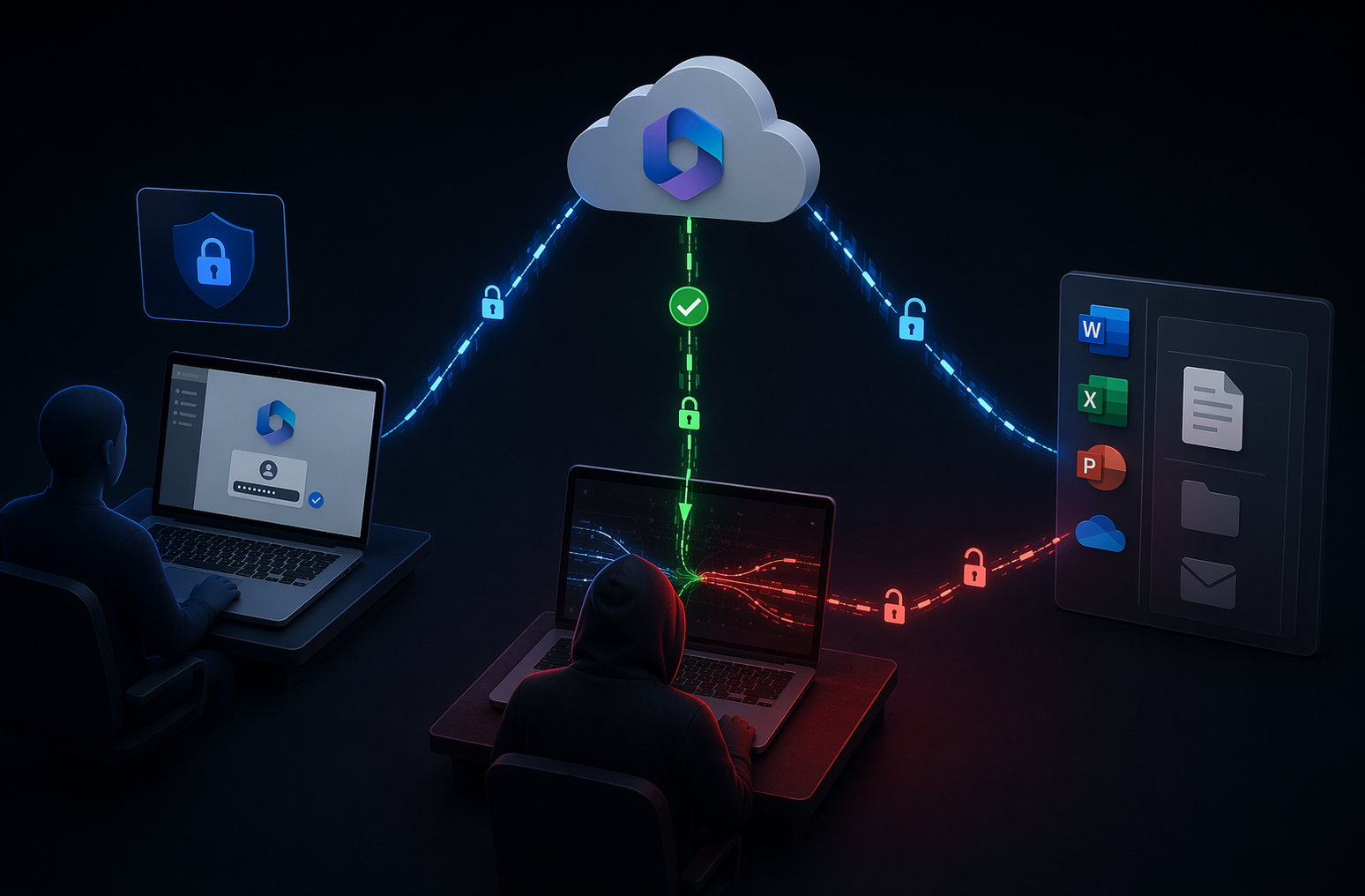
A lot of businesses say they use MFA, but when you look closer, it is often inconsistent. Some users have it. Some do not. Some accounts still rely on weaker sign-in methods. Some systems still allow easier bypass options that were never cleaned up after rollout. That creates one of the most common cybersecurity gaps in small business environments: security controls that exist but are not fully enforced.
A stronger baseline usually includes:
- modern, phishing-resistant authentication where possible
- MFA enforced across all critical accounts
- removal of outdated or weaker sign-in methods
- risk-based sign-in controls for unusual behavior
This is one of those areas where “mostly protected” is not the same as protected.
2) Devices That Are Managed… Kind Of
One of the most overlooked cybersecurity gaps is not having a clearly enforced definition of what qualifies as a secure business device. A lot of businesses assume device security is handled because laptops are enrolled in something, updates are “supposed” to happen, and antivirus is installed.
That includes questions like:
- What happens if a device falls behind on updates?
- Are personal devices allowed to access business systems?
- Are security settings enforced or just recommended?
- Is encryption required?
- Is access restricted when devices fall out of compliance?
Without those standards, businesses end up relying too heavily on user behavior and good intentions.
3) Email Protection That Depends Too Much on Employees
Email is still where a lot of problems begin yet many businesses are still relying on one annual training session and hoping employees catch everything before it becomes an issue. That leaves a major cybersecurity gap. Training matters, but it should not be the only line of defense. Good security should include built-in protections that reduce the chance of common mistakes turning into larger incidents.
That means your environment should help prevent:
- impersonation attempts
- malicious links and attachments
- suspicious sender spoofing
- lookalike domains
- account takeover fallout
If your current setup depends too heavily on users being perfect every day, there is probably room to strengthen this layer.
4) “Managed Patching” Without Real Visibility
This one catches a lot of businesses off guard. A lot of providers will say patching is covered, but when you ask for proof, or ask what happens when updates fail, things get vague quickly. That is where another common cybersecurity gap shows up. Patching is not just about attempting updates. It is about knowing:
- what is missing
- what failed
- what is overdue
- what is being excluded
- what risk exceptions are quietly building up over time
That visibility matters because if your patching process only works when everything goes smoothly, it is not really a dependable process.
5) Alerts Without Real Response Readiness
A lot of environments generate alerts. That does not mean they are prepared to respond well. This is one of the biggest cybersecurity gaps we see with fragmented or overly tool-heavy environments. Alerts exist, but no one has a clean, repeatable plan for what happens when one matters. That leads to delays, confusion, and inconsistent response when timing matters most.
A stronger approach includes:
- meaningful alert triage
- clear ownership for incident response
- practical runbooks for common scenarios
- tested recovery steps
- communication plans that do not get invented in the middle of a problem
This is where comprehensive IT really matters. Because when something goes wrong, you do not want a stack of disconnected tools and finger-pointing between vendors. You want one team that knows your environment, understands your standards, and can move quickly with confidence.
If You Are Seeing These Cybersecurity Gaps, It May Be Time to Rethink Your IT Partner
This is the part many businesses quietly sit with for a while. They read a list like this and start realizing a few things sound familiar. Maybe you are not sure how complete your coverage really is. Maybe your current provider is responsive, but not strategic. Maybe you have tools in place, but not much confidence in how they all fit together. Maybe your security has grown in pieces, and no one has really stepped back to look at the whole picture.
If that is where you are, it may be time to switch. Not because you need more complexity. Usually the opposite. What most businesses need is a provider who can simplify, standardize, and close the gaps others left behind. That is a big part of what we do at Keystone. We do not bolt on random tools and call it security. We build complete, practical environments that are easier to manage, easier to trust, and better aligned to how your business actually operates.
And if switching feels like it would be a headache, that concern is understandable too. We make switching easy. A good transition should not create chaos. It should create clarity. It should leave you with fewer unknowns, cleaner systems, stronger standards, and a much better understanding of what is actually being protected. That is what comprehensive IT support is supposed to feel like.
What a Better Security Baseline Looks Like
A stronger environment does not have to be flashy or overengineered. In fact, the best security setups are usually the ones that feel calm, consistent, and well-run.
That means:
- strong authentication that is enforced everywhere it should be
- trusted device standards that are actually applied
- email protections that reduce human error
- patching with real visibility and follow-through
- monitoring and response that are not improvised
When those layers are in place and working together, cybersecurity gaps become much easier to spot and much harder to ignore.
Most businesses do not need more noise around cybersecurity. They need clarity. They need someone to help them see where the real gaps are, understand what matters most, and build a security baseline that actually holds up. That is what makes this worth paying attention to. Not because every business needs to panic, but because many are operating with more exposure than they realize. If you are reading this and thinking, “I hope we do not have those gaps,” that is exactly the right instinct, and that is also a good reason to take a closer look.
Quick Answers
What are cybersecurity gaps?
Cybersecurity gaps are weak points in your business’s security coverage, often caused by inconsistent tools, missing controls, poor visibility, or incomplete response planning.
Why do small businesses end up with cybersecurity gaps?
Usually because their IT and security environment was built over time in pieces rather than designed as one coordinated system. That creates overlap in some areas and blind spots in others.
How do I know if my current IT provider is leaving gaps?
If you are not confident in how your protections work together, what standards are enforced, or how incidents would be handled, there is a good chance some gaps exist.
Can switching IT providers actually improve security?
Yes, especially if your current setup is fragmented or reactive. A more comprehensive IT partner can simplify your environment, standardize protections, and close gaps that have been quietly building over time.
At Keystone, we don’t just manage IT—we execute. We ensure smooth transitions, rock-solid security, and maximum efficiency so your business can thrive. Let us handle the complexity of IT while you stay focused on what matters most—growing your business. Contact us today to schedule a consultation and see how Keystone delivers results you can trust.