Multi-factor authentication (MFA) is one of the most important security improvements a business can make. It helps stop stolen passwords from turning into compromised accounts and reduces the success rate of common phishing attacks, but MFA is not the final step in protecting access to your systems.
Modern attackers are focused on what happens after a user signs in. Instead of trying to break MFA directly, they look for ways to steal the authenticated session itself. One of the most common methods is session cookie hijacking.
Understanding how session cookie hijacking works helps businesses build stronger, more realistic security strategies. It also highlights why cybersecurity today depends on layered protection rather than relying on any single control.
What Is Session Cookie Hijacking?
Session cookie hijacking happens when an attacker steals the data that keeps a user logged into a website or cloud application. After you successfully sign in to an application, your browser stores a small piece of data called a session token or session cookie. This tells the application that you have already authenticated. It prevents you from needing to enter your password and MFA code every time you click to another page.
A helpful way to think about it is like a wristband at an event. Once security checks your ticket, the wristband becomes proof that you belong there. You do not need to stop at the entrance every few minutes to prove yourself again. The problem is that if someone steals the wristband, they may be able to move through the event as if they were you.
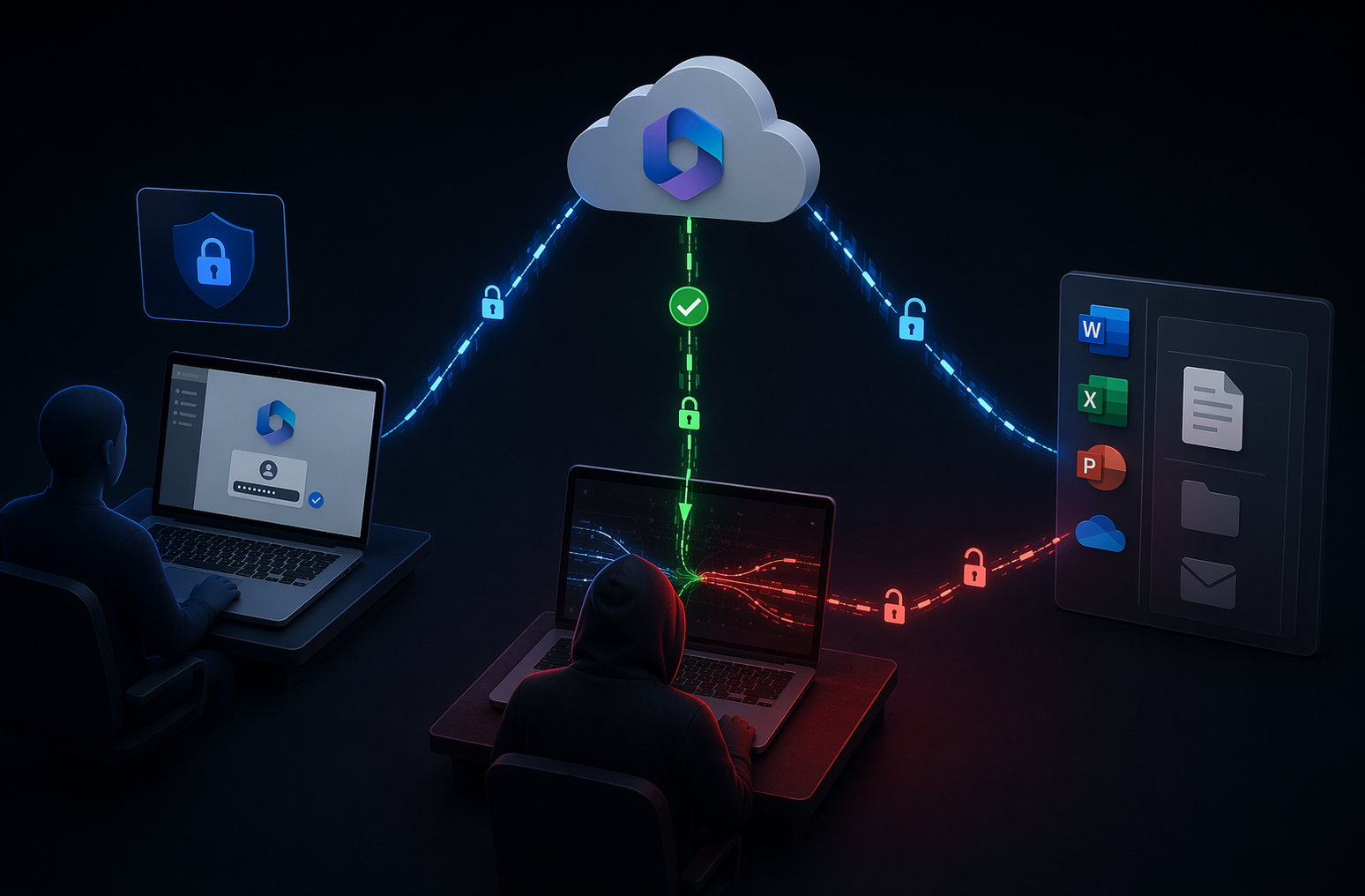
That is exactly what attackers attempt with session cookie hijacking. They are not cracking your MFA code. They are reusing your authenticated session so they can access applications without triggering another login challenge. According to Microsoft Security, many modern phishing attacks now focus on stealing session tokens rather than passwords alone because it allows attackers to bypass parts of the authentication process entirely.
Why MFA Still Matters
Session cookie hijacking is not evidence that MFA has failed. In fact, MFA remains one of the strongest protections against account compromise. Businesses that do not use MFA are significantly more vulnerable to password-based attacks, credential stuffing, and basic phishing attempts.
The important distinction is that MFA protects the login process. It does not automatically secure everything that happens afterward. Attackers understand this. Instead of focusing only on passwords, they increasingly target active browser sessions, trusted devices, and authenticated tokens. That shift changes how organizations should think about cybersecurity. MFA should be treated as a foundational control rather than a complete solution.
Strong security depends on layers working together:
- MFA to protect credentials
- Endpoint protection to secure devices
- Browser and session controls to reduce token theft
- Monitoring tools to detect suspicious activity
- User education to recognize phishing attempts
- Conditional access policies to limit risky logins
This layered approach reduces the likelihood that a single mistake or stolen session turns into a larger compromise.
How Session Cookie Hijacking Happens
Session hijacking attacks are often quieter and less obvious than traditional account takeover attempts. Instead of repeatedly guessing passwords or spamming MFA prompts, attackers try to capture an already authenticated session. Here are some of the most common ways this happens:
Adversary-in-the-Middle (AiTM) Phishing
AiTM phishing attacks use a fake login page that sits between the user and the legitimate website. The attacker creates a convincing copy of a Microsoft 365, Google Workspace, or banking login portal. When the user enters their credentials, the attacker forwards the information to the real service in real time. The real site processes the login normally, including MFA.
From the user’s perspective, everything appears legitimate, but during that process, the attacker captures the session cookie generated after authentication succeeds. Because the session is already validated, the attacker may be able to reuse that token without needing to complete MFA themselves.
Microsoft has documented large-scale AiTM phishing campaigns targeting thousands of organizations worldwide. These attacks continue to grow because they are effective against environments that rely only on traditional MFA methods.
Browser-in-the-Middle Attacks
Browser-in-the-middle attacks take session theft even further. Instead of simply relaying login traffic, the attacker effectively controls the browsing session itself. This allows them to intercept authenticated tokens and monitor user activity after login.
Google’s threat intelligence teams have warned that stealing an authenticated session token can be equivalent to stealing the user’s active identity for that session. This is one reason why browser security, endpoint health, and session monitoring have become increasingly important parts of cybersecurity programs.
Malware and Endpoint Compromise
Not every session hijacking attack begins with phishing. If a device is already infected with malware, attackers may be able to extract session cookies directly from the browser. Many modern browsers store authentication tokens locally so users can remain signed in across sessions.
Malware designed to harvest credentials often targets these stored tokens because they can provide immediate access to cloud applications. This is why device security matters just as much as account security. An organization can have strong MFA policies in place, but if an attacker gains control of the endpoint itself, they may still find ways to capture authenticated sessions.
Why Session Security Matters for Businesses
Session cookie hijacking is especially dangerous because it often looks like normal user activity. If an attacker is using a legitimate session token, traditional login alerts may never trigger. To the application, the session appears authenticated.
This creates several challenges:
- Attackers may gain access without failed login attempts
- Security teams may not immediately detect suspicious activity
- Cloud applications may trust the session automatically
- Compromised sessions can move laterally between connected services
For businesses using Microsoft 365, Google Workspace, CRMs, financial systems, or remote collaboration tools, session security has become a critical part of protecting day-to-day operations. The rise of remote work and browser-based applications has only increased the importance of securing authenticated sessions.
Building a More Layered Defense
There is no single tool that completely eliminates session hijacking risk. The goal is to reduce opportunities for attackers while improving visibility into suspicious behavior. Several practical controls can strengthen protection:
Use Phishing-Resistant MFA
Not all MFA methods provide the same level of protection. Security keys and passkey-based authentication are more resistant to AiTM phishing than SMS codes or push notifications because they validate the legitimate website before authentication succeeds. Phishing-resistant MFA reduces the likelihood that attackers can capture usable session data during fake login attempts.
Improve Endpoint Security
Since session tokens can be stolen directly from infected devices, endpoint security plays a major role in identity protection.
This includes:
- Keeping browsers and operating systems updated
- Using managed endpoint detection and response (EDR)
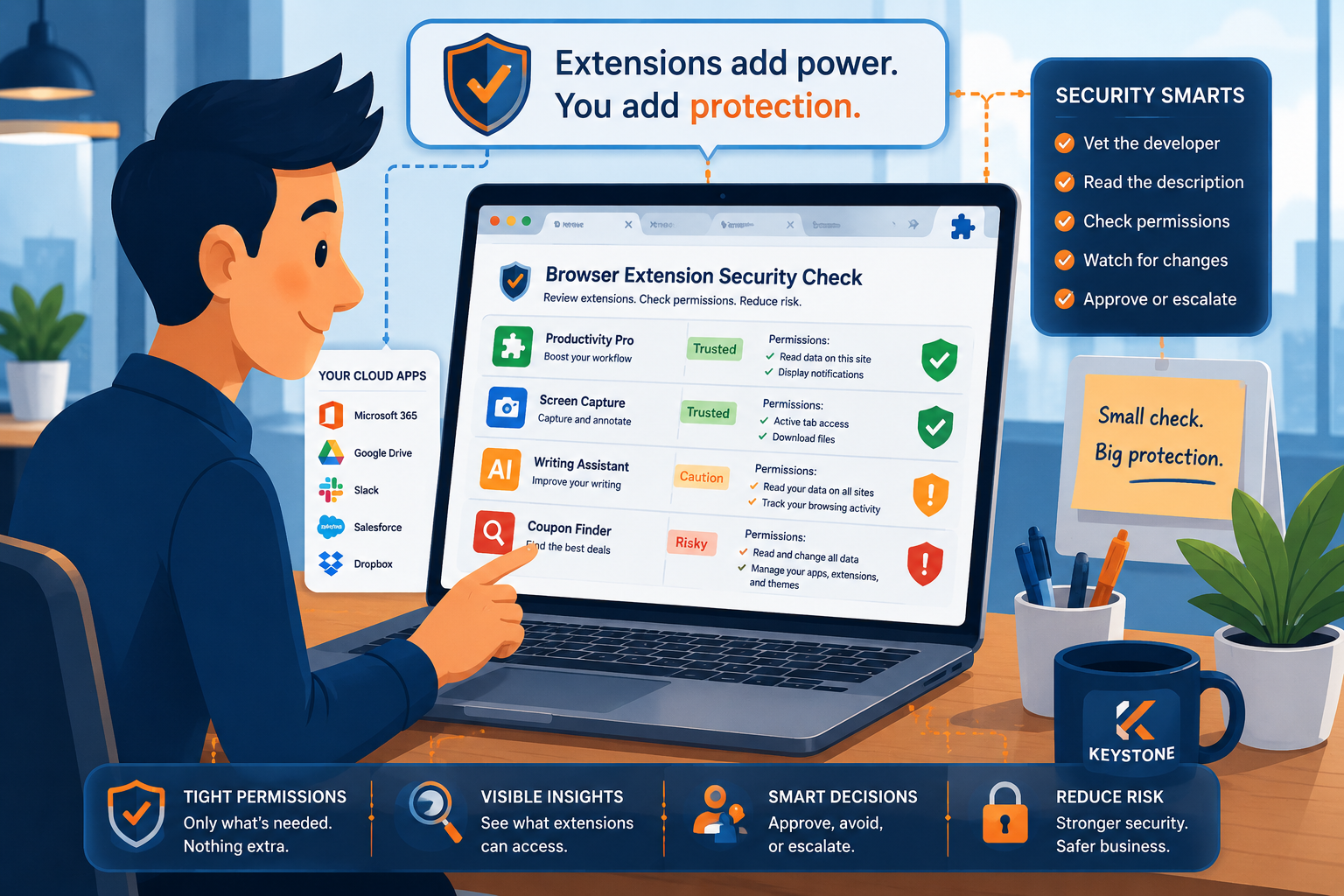
- Limiting unnecessary browser extensions
- Monitoring for malware and credential theft activity
- Enforcing device compliance policies
Healthy devices help reduce opportunities for attackers to access stored session information.
Tighten Session Policies
Organizations can also reduce exposure by shortening session lifetimes and requiring reauthentication for sensitive actions.
Conditional access policies can help detect unusual behavior such as:
- Logins from unfamiliar locations
- Impossible travel scenarios
- Sudden device changes
- High-risk sign-in activity
These controls help identify when a session may be replayed by an attacker.
Educate Users Without Fear Tactics
Cybersecurity awareness still matters, especially around phishing.
Employees should understand that modern phishing attacks may look convincing and may even appear to complete MFA successfully. The goal is not to create fear, but to build awareness around how attackers operate today.
Clear reporting processes and ongoing education help organizations respond faster when something suspicious occurs.
MFA Is Still Essential, But It Cannot Stand Alone
Session cookie hijacking is a reminder that cybersecurity is no longer just about protecting passwords. Attackers increasingly target authenticated sessions, trusted browsers, and valid tokens because those methods allow them to bypass traditional login defenses. That does not make MFA obsolete. It makes layered security more important.
Businesses that combine MFA with strong endpoint protection, phishing-resistant authentication, session monitoring, and clear security policies are far better positioned to reduce risk and respond quickly when threats appear. The goal is not perfect security. It is building reliable, practical protections that work together to make compromise significantly harder.
At Keystone, we don’t just manage IT—we execute. We ensure smooth transitions, rock-solid security, and maximum efficiency so your business can thrive. Let us handle the complexity of IT while you stay focused on what matters most—growing your business. Contact us today to schedule a consultation and see how Keystone delivers results you can trust.
Common Questions
Absolutely. MFA remains one of the most effective security controls available. Session hijacking highlights the need for additional layers around authentication, not the removal of MFA.
Cloud applications that store authenticated sessions in browsers are common targets. This includes email platforms, Microsoft 365, Google Workspace, financial systems, CRMs, and collaboration tools.
Antivirus and endpoint protection tools can help reduce the risk, especially against malware-based token theft. However, phishing-resistant MFA, browser protections, session controls, and user awareness are also important parts of defense.
It has become increasingly common in targeted phishing campaigns and cloud-focused attacks. Security researchers and major vendors like Microsoft and Google have both reported growth in attacks designed to steal authenticated session tokens.
Yes. If an attacker steals a valid authenticated session token, they may be able to access applications without completing MFA again. This does not mean MFA failed. It means the attacker reused the session after MFA had already been completed.