AI can write an email, summarize a meeting, explain an error message, walk you through a printer problem, and hand you a tidy list of steps for fixing just about any technology issue you can describe. It is fast, it is available around the clock, and it rarely gets tired of your questions. So it is no surprise that business owners are starting to ask a bigger one.
If AI can answer technology questions, why do we still need an IT company?
It is a fair question, and a smart one to be asking right now. Every headline is telling businesses that AI is about to replace jobs, flatten departments, and make entire categories of professional services obsolete. If you are paying a monthly bill for IT, you should absolutely be asking whether that IT is still worth the cost.
But there is an assumption buried inside the question, and it is worth pulling out into the light. The question assumes the value of IT comes from knowing the answer.
It never has.
The real value of IT comes from accountability, security, risk management, business continuity, and judgment. It comes from having someone who is genuinely responsible for what happens when technology touches the rest of your business. AI can hand you information all day long. What it cannot do is take responsibility for the outcome.
IT Has Never Really Been About Knowing the Answer
Every few years a new technology shows up alongside a confident prediction that businesses will no longer need IT professionals. Cloud computing was going to eliminate infrastructure. Software as a Service was going to eliminate traditional technology management. Self-service platforms were supposed to make support unnecessary. Each one arrived with the same promise, and now AI is the latest name attached to it.
And yet businesses are more dependent on technology today than they have ever been, not less. If any of those earlier predictions had been right, the IT industry would have quietly disappeared a decade ago. Instead it grew, because the thing people were actually paying for was never the part a new tool could replace.
Technology support has never really been about knowing how to reset a password or fix Outlook. That knowledge is the easy part, and it always has been. The hard part is knowing what happens if you make the wrong change.
AI can generate a troubleshooting answer in seconds. The difficult work starts after that: deciding whether the answer is correct, whether it is safe, whether it is appropriate for your specific environment, whether it is cost-effective, and whether it plays nicely with everything else you have running. A suggested fix might technically solve one problem and quietly create three more. A setting change might weaken your security posture in a way nobody notices for months. A new application might conflict with a system your team depends on every day. A permission adjustment might expose information that was supposed to stay locked down. A shortcut that works perfectly for one business might violate the policies, compliance requirements, or security standards of another.
That is why good IT has always required more than technical knowledge. It requires context, and it requires judgment. The answer is cheap. Knowing whether the answer is right for you is where the value lives.
AI Can Give You Instructions, but IT Owns the Outcome.
Say your email stops working one morning. You can ask an AI chatbot what might be wrong, and it will give you a reasonable list of troubleshooting steps. Restart Outlook. Check your internet connection. Review your account settings. Clear your credentials. Check Microsoft 365 service health. Any of those might be exactly right, and any of them might be a complete waste of the next forty-five minutes.
A managed IT provider is not simply handing you that list and wishing you luck. We are figuring out what is actually wrong. Is the issue isolated to one employee, or is it happening across the whole company? Is the problem living on the workstation, in the Microsoft 365 account, inside a security policy, in a licensing hiccup, in a service outage on Microsoft’s end, or somewhere else entirely? We narrow it down, we fix it, and if the first solution does not hold, we keep working the problem until it does.
That is the piece that gets lost when people line AI up against IT and ask which one wins. Business owners are not paying an IT provider because they lack access to Google, YouTube, Reddit, or ChatGPT. Those resources have been free and abundant for years. They are paying because somebody needs to own the result.
Consider what that ownership looks like on a bad day. If ransomware hits, AI is not coordinating your recovery. If your backups fail, AI is not the one confirming whether they can actually be restored before you stake your business on them. If a critical application goes dark at eight o’clock on a Monday morning, AI is not calling the vendor, tracing the network, keeping your employees informed, and staying with the problem until people can get back to work. A real IT partner is doing every one of those things.
Instructions are easy to come by. Someone who owns the outcome is not.
Modern Technology Is Too Connected for One-Size-Fits-All Answers
A modern small business might rely on Microsoft 365, cloud applications, line-of-business software, endpoint security, backup systems, mobile devices, firewalls, wireless networks, printers, accounting software, collaboration tools, remote access, and dozens of individual user accounts. That is not an unusual setup. That is a Tuesday for us.
The challenge is rarely one isolated piece of technology sitting off by itself. The challenge is how all of those pieces interact with one another. AI can explain what a firewall does in a clear, well-written paragraph. An IT professional understands how your firewall, your Microsoft 365 environment, your endpoint security, your backup platform, your remote workforce, your compliance obligations, and your cyber insurance requirements all pull on each other. That is a fundamentally different level of responsibility, and it does not come from a generic explanation.
Technology environments also accumulate history, the same way a building accumulates renovations. There is usually a reason a particular security rule exists, even if nobody wrote it down. There may be an older application that only behaves if it is configured a very specific way. There may be a vendor dependency that is invisible if you are only looking at one device. There may be employees who genuinely need access to certain systems and absolutely must not have access to others. Good IT carries that history in its head, or better yet in its documentation, and that context is exactly what keeps a simple change from turning into a large, expensive problem.
AI Does Not Know Your Business the Way Your IT Partner Does
AI works from the information you give it in the moment. A good IT provider works from an ongoing relationship with your business, built over months and years.
When one of our clients calls Keystone, we already know how their environment is put together, what software they run their business on, which employees need access to what, which security requirements actually apply to them, which systems have caused trouble before, and what technology decisions have already been made and why. That history changes the answer we give, because it changes what a good answer even looks like.
The right solution for a CPA firm may be entirely wrong for a nonprofit. The right level of access for one employee may be completely inappropriate for the person sitting next to them. A ten-person company needs a very different technology strategy than a two-hundred-person organization, even if they are in the same industry. A recommendation that looks inexpensive today can quietly turn into a large operational cost two years down the road.
The truth underneath all of this is that technology decisions are business decisions. They affect productivity, risk, cash flow, staffing, compliance, customer service, and growth. A good IT partner understands that the goal is not to pick the most technically impressive option on the table. The goal is to pick the option that makes sense for your business. AI can tell you what is possible.
AI does not know what is wise for you specifically, because it does not know you.
The Value of IT Is Often in the Problems You Never See
One of the hardest things about evaluating IT honestly is that good IT tends to look uneventful. Your computers worked today. Nobody lost access to an important file. Your Microsoft 365 accounts were not compromised. Your firewall stayed online. Your backup completed without complaint. Your employees logged in and did their jobs. Nobody called the owner because a small printer issue had ballooned into a three-hour ordeal.
All of that quiet can make IT feel invisible, and invisible can start to feel like something you might not need. But invisible is usually exactly what you are paying for, and it is a big part of why good IT is worth the cost. A great deal of IT value comes from stopping disruption before it ever reaches the business at all.
Monitoring catches failing hardware before it dies completely. Patch management closes vulnerabilities before anyone gets a chance to exploit them. Security tools block malicious activity before an employee ever sees the email. Lifecycle planning replaces aging equipment on a schedule, rather than during payroll week when it finally gives out. Backup monitoring flags a failed backup on an ordinary afternoon, instead of on the one day you desperately need to restore. Account management pulls a departing employee’s access the moment they leave, before it becomes a liability.
The cost of good IT is easy to see, because it lands on a predictable invoice each month. The cost of poor IT is scattered everywhere else and much harder to add up.
It shows up as downtime, lost employee hours, missed deadlines, security incidents, panic purchases, frustrated customers, and owners spending their evenings untangling technology problems instead of running the company they built. The invoice is visible. The disasters that never happened are not, and that is the whole point.
Cybersecurity Requires More Than Software
AI is going to make cybersecurity tools sharper and faster. It is also, in the same breath, making cybercrime sharper and faster. Attackers are already using AI to write more convincing phishing emails, more believable impersonation attempts, cleaner fake messages, and more sophisticated social engineering campaigns than they ever could before. The floor for a convincing attack has dropped, and the volume has gone up.
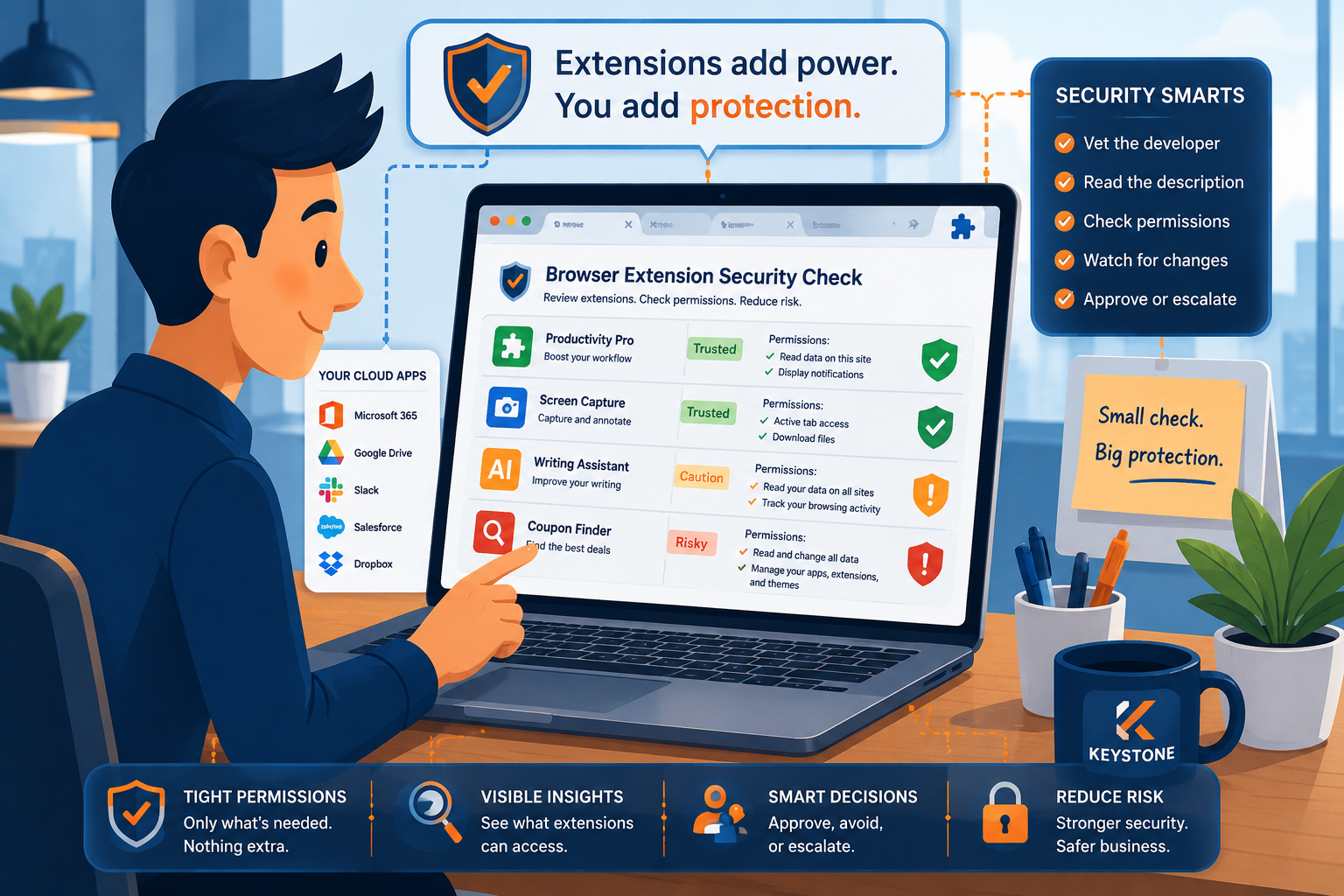
That means businesses need good security tools more than ever, but it also means tools alone were never going to be enough. Someone still has to configure multi-factor authentication correctly rather than just switching it on. Someone has to manage user access as people join, move, and leave. Someone has to secure the devices, review the alerts, and notice the unusual behavior that a dashboard might surface but will not act on. Someone has to make sure former employees truly no longer have a way in. Someone has to keep the backups healthy, validate the security settings, and respond the moment an account is compromised.
And sometimes someone simply has to make a judgment call. Is this login normal, or is it the first sign of trouble? Should this user really have access to that folder? Can this application be installed safely, or does it introduce risk that outweighs the convenience? Is this alert a harmless false positive, or the opening move of a real security incident? AI can help analyze the information behind each of those questions, and it can do it well. What it cannot do is take on the responsibility of deciding what happens next and then carrying that decision all the way through.
Security is not a product you buy once. It is a discipline someone has to own.
Business Continuity Is Where IT Becomes Very Real
Every business should operate on the assumption that something, eventually, will go wrong. A hard drive will fail. A laptop will be lost or stolen. Someone will delete a file they very much needed. Internet service will go down at the worst possible moment. A vendor will have an outage. An employee will click something they should not have. A cloud service you depend on will have a bad day of its own. Even the strongest security controls in the world cannot eliminate every possible failure, and pretending otherwise is how businesses get blindsided.
That is precisely why business continuity matters. The real question was never whether a problem will happen. The real question is what happens next.
Can the business recover? How long will that recovery take? What data might be lost along the way? Are the backups actually usable, or do they just exist? Does anyone actually know how to restore the system under pressure? Who is communicating with employees while everyone waits? Who is on the phone with vendors? Who is deciding what gets fixed first when everything feels urgent? Who, in plain terms, owns the recovery?
Those answers do not magically appear the moment a company buys backup software. They come from planning, documentation, testing, monitoring, hard-won experience, and people who understand the environment well enough to move quickly when prevention finally fails. The day something goes seriously wrong tends to be the exact day the value of good IT becomes impossible to ignore, and the day it becomes obvious that a real partner was worth the cost all along. The businesses that get through it well are almost always the ones that did the unglamorous work long before they needed it.
Good IT Also Protects Employee Time
Not every technology problem is a five-alarm fire. Most of them are small, and that is exactly why they add up. A password will not work. Someone cannot find the microphone in Teams. A file has disappeared. A computer is dragging. A scanner has stopped emailing documents to the front desk. A new hire cannot get into the folder they need on day one. An application keeps crashing for no obvious reason.
Any one of these might cost an employee twenty minutes, or maybe an hour. On its own, that is nothing. But multiply those interruptions across every employee, across every week, across an entire year, and the cost stops being trivial in a hurry. Every hour an employee spends trying to be their own IT department is an hour they are not doing the work you actually hired them to do.
Good support gives people somewhere to go the moment they are stuck. Just as importantly, it makes them comfortable asking for help early, before a small issue quietly grows into a bigger one. That is not only a technical benefit. It is an operational one, and it shows up in morale and output long before it shows up anywhere on a spreadsheet.
AI Is Actually Making Good IT More Important
This may be the most important part of the whole conversation.
The businesses getting the most out of AI right now are not the ones tearing out their IT teams. They are the ones building stronger technology foundations so they can adopt AI safely and actually benefit from it. AI does not reward a messy environment. It exposes one.
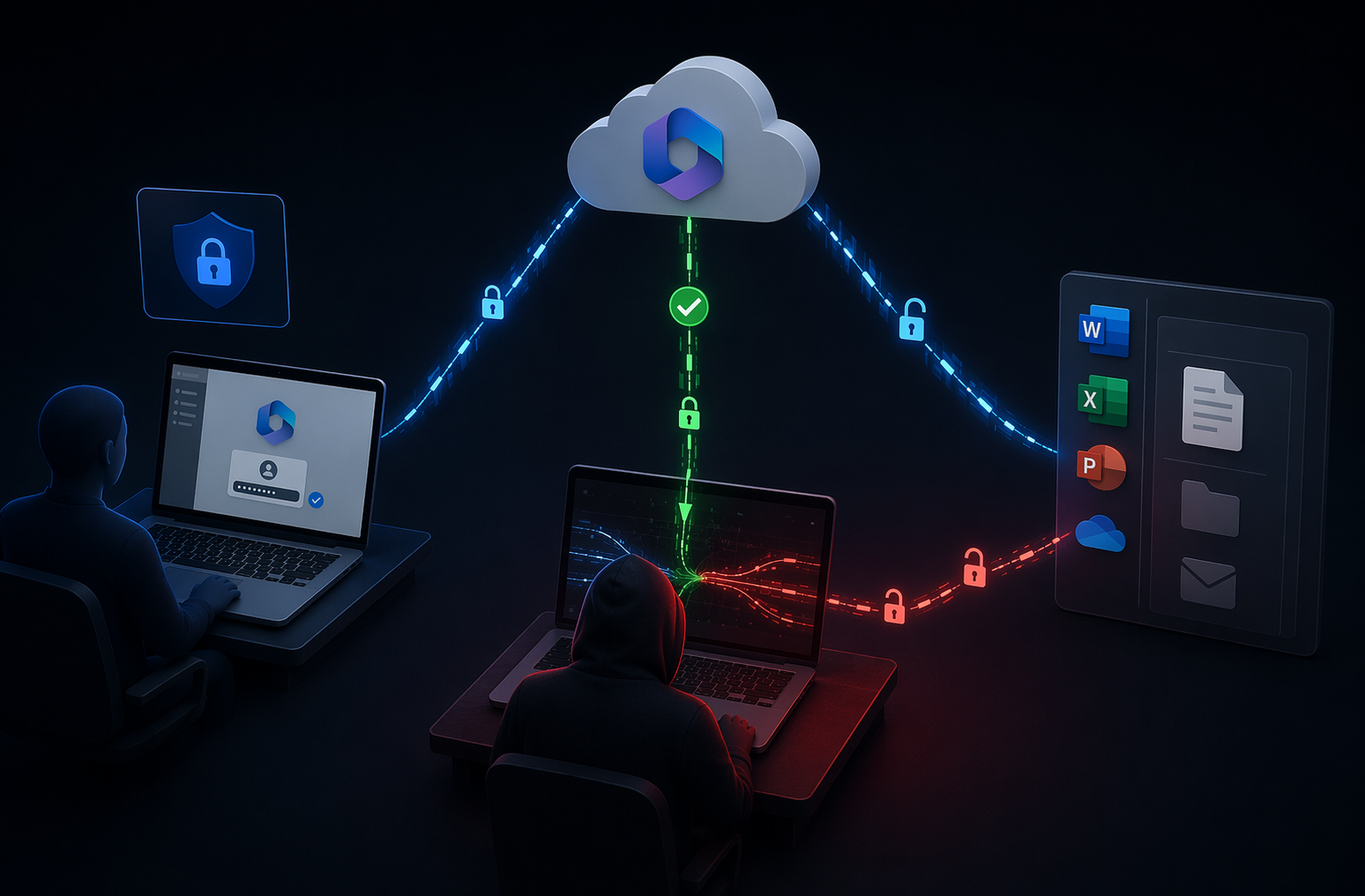
Microsoft Copilot is a perfect example. Copilot can summarize documents, draft content, dig up information, analyze data, and help your team move dramatically faster inside Microsoft 365. But Copilot works within the access each employee already has. It does not invent new boundaries. It respects the ones you have, or the ones you have neglected. That means your permissions matter. Your SharePoint structure matters. Your OneDrive policies matter. Your Microsoft 365 security configuration matters. Your identity management matters. Where your employees store information, and who can reach it, matters enormously.
If your environment is well organized and properly secured, AI can make your information dramatically easier to put to work. If your environment is a mess, AI will cheerfully make that mess easier to find, surface, and spread. Before a business gets excited about everything AI can do, it needs to make sure the foundation underneath it is actually ready to support it. That foundation is IT work, and there is no shortcut around it.
The Future Is Not AI Versus IT
At Keystone, we use AI, too. Of course we do. It helps us research faster, write and maintain better documentation, automate the repetitive work, spot patterns across environments, and take some of the friction out of administrative tasks. Those are all genuinely good things, and we would be foolish to ignore them.
AI should make skilled IT professionals more effective, and it does. What it does not replace is experience, strategic thinking, risk assessment, real client relationships, deep troubleshooting expertise, judgment, and accountability. Those are not features you can download. They are earned, and they are human.
So the future is not AI versus IT. It is AI-powered IT. The strongest businesses over the next several years will use AI to make their people more productive while still maintaining the people, systems, security, and strategy required to support everything around it. The tool and the team are not competitors. They are a partnership, and the businesses that understand that will pull ahead of the ones that pick a side.
So, What Are You Really Paying Your IT Company For?
You are not paying someone to know how to reboot a computer. You are paying for someone to understand your environment before they change anything in it. You are paying for someone to watch for risk before it turns into disruption. You are paying for someone to protect your data and your employees’ ability to simply do their jobs. You are paying for someone to plan for failures before they arrive, rather than scramble after they do. You are paying for someone to help you make technology decisions that fit your business, instead of selling you one more tool you did not need. You are paying for someone who knows when the easy answer is not the right answer. You are paying for someone to help your business adopt new technology, AI included, without quietly introducing new risk. And when something does go wrong, you are paying for someone to take responsibility and get you through it.
If technology were only about finding answers, AI could replace IT tomorrow, and we would tell you so. But business technology has never been about answers, and that is exactly why good IT stays worth the cost. It is about trust, continuity, security, judgment, and ownership. AI is an incredible tool, maybe the most powerful one to come along in a generation. A trusted IT partner is the team responsible for making sure all of those tools actually work together for your business.
The companies that thrive over the next decade will not be the ones choosing between people and AI. They will be the ones smart enough to use both.
At Keystone, we don’t just manage IT— we execute. We ensure smooth transitions, rock-solid security, and maximum efficiency so your business can thrive. Let us handle the complexity of IT while you stay focused on what matters most— growing your business. Contact us today to schedule a consultation and see how Keystone delivers results you can trust.